The Digital Twin Imperative: From Operational Mirror to Strategic Foresight Engine.
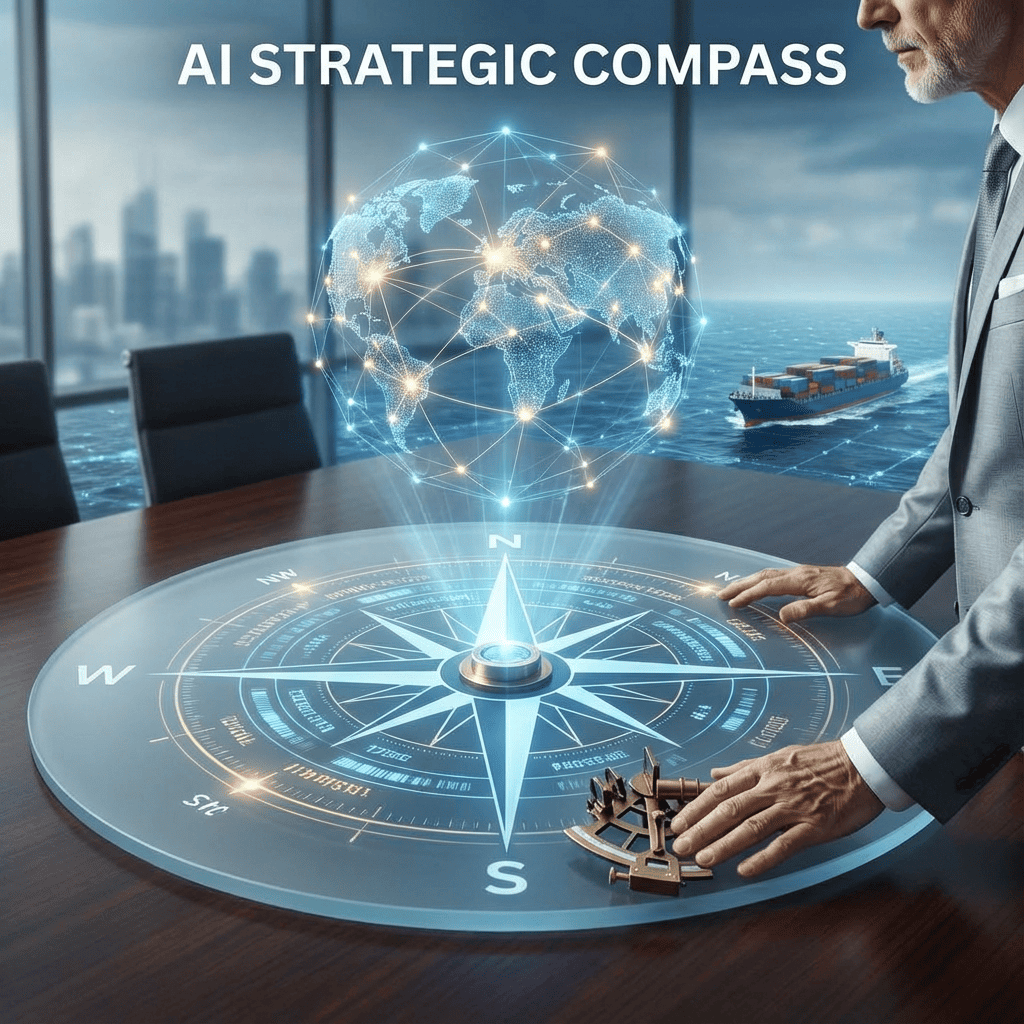
The most perilous decisions are those made in the dark. For decades, strategic choices—where to allocate capital, how to integrate a major acquisition, how to pivot a supply chain amidst geopolitical turmoil—have been exercises in informed estimation. We built models, consulted forecasts, and relied on experience, but ultimately, we launched ships into fog-shrouded seas, hoping our charts were accurate. Today, a transformative technology is burning off that fog, offering not just a clearer view of the present but a provable glimpse of the future. This is the evolution of the digital twin from a tactical operational mirror into a strategic foresight engine.
The journey begins, as most profound shifts do, with a solid foundation. The first generation of digital twins delivered undeniable value. By creating a dynamic, data-fed virtual replica of a physical asset—a jet engine, a wind turbine, a production line—we unlocked unprecedented operational clarity. Predictive maintenance slashed downtime, performance optimization yielded efficiency gains, and what was once opaque became transparent. Siemens, for instance, famously uses asset-level twins to monitor gas turbines, predicting failures with stunning accuracy. But this was merely the prelude. Confining the digital twin to the realm of assets is like using a supercomputer solely as a calculator. Its true potential lies in scale and integration.
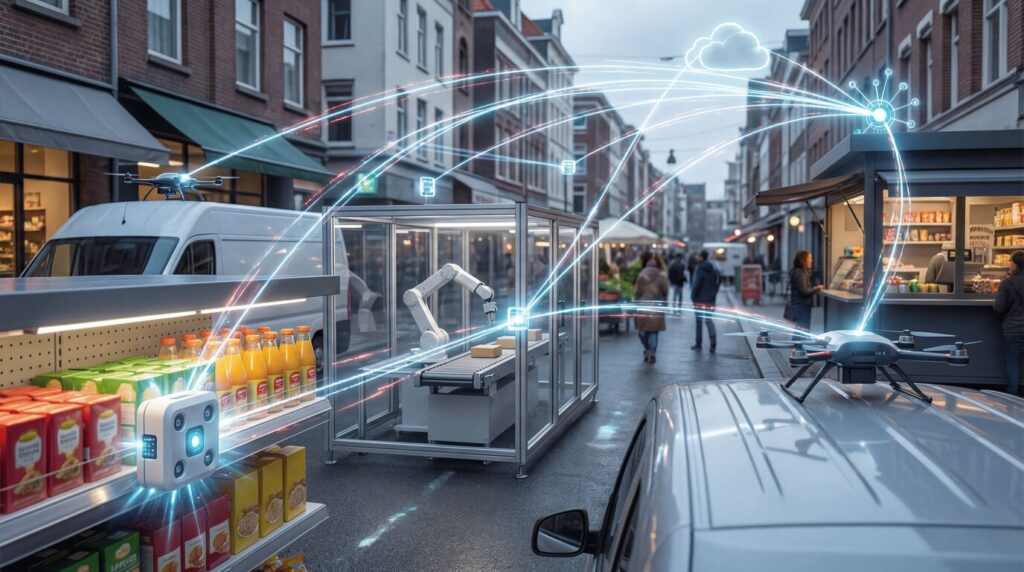
The strategic imperative emerges when we stop twinning things and start twinning systems. Imagine an enterprise-scale digital twin: a living, breathing virtual replica of your entire end-to-end value chain. This is not a static map or a monthly dashboard. It is a complex, adaptive simulation that ingests real-time data from your factories, logistics networks, ERP and CRM systems, and even external feeds such as weather, commodity prices, and port congestion statistics. It is your entire operation, rendered in a virtual sandbox where time can be sped up, slowed down, or rewound.
This evolution shifts the core value proposition from monitoring to interrogation. The twin becomes a strategic foresight engine, a tool for answering the “what if” questions that keep CEOs awake at night.
Stress-Testing Strategy in a Risk-Free Universe: Consider capital allocation. A traditional business case for a new manufacturing facility is built on spreadsheets with linear projections. But how will that facility perform if a key supplier fails? If regional energy costs triple? If demand shifts unexpectedly? An enterprise-scale twin can simulate thousands of these scenarios simultaneously, incorporating volatile variables and revealing non-linear interactions. It moves strategy from a point-in-time document to a continuous, probabilistic simulation. Unilever, in its pursuit of supply chain resilience, has pioneered this approach, using sophisticated digital twins of its manufacturing and logistics networks to model disruptions and optimize responses, turning volatility from a threat into a managed variable.
The M&A Crystal Ball: Mergers and acquisitions remain a high-stakes gamble, with failure rates often cited between 70%-90%. Integration is the graveyard of synergy promises. Now, envision a pre-merger environment where you can create a “fusion twin.” By integrating the digital twins (or building proxy models) of both companies, you can simulate the integration process itself. Run the combined entity’s supply chain for a simulated year. Stress-test the unified IT architecture under peak load. Model the cultural friction points in workflow handoffs. What is the true optimal way to consolidate these two distribution networks? Which brands would cannibalize each other, and which would flourish? This is no longer theoretical. Companies like Bosch are using digital twin methodologies to simulate post-acquisition factory integrations, de-risking physical consolidation by first perfecting it in the digital realm.
Modeling Market Disruptions with Precision: The past few years have been a masterclass in disruption. A container ship blocks the Suez Canal. A pandemic locks down a critical industrial region. A new regulation rewrites the rules of an industry. An enterprise twin, fed with external data, lets you run these scenarios before they happen. It transforms crisis management from a reactive scramble into a proactive drill. You can watch a simulated hurricane propagate through your supplier network in minutes, identifying the single-point failures that would take weeks to emerge in reality. You can model the impact of a carbon tax or of circular-economy mandates on your product lifecycle costs. This is strategic resilience, quantified.
The architectural and cultural implications of this shift are profound. Building an enterprise-scale foresight engine is not an IT project; it is a core strategic initiative. It demands a foundation of interoperability—breaking down data silos so that the twin’s financial model can talk to its logistics model, which can talk to its energy model. It requires investments in high-performance computing and advances in simulation AI to handle the staggering complexity. Perhaps most critically, it necessitates a new organizational muscle: the ability to trust, interpret, and act upon the outputs of a simulation.
Leaders must learn to converse with the twin. This requires a blend of technical literacy and strategic intuition, asking not just for an answer, but for the range of probable outcomes and the underlying assumptions. The “gut feel” is not replaced; it is augmented by a “simulated feel,” an evidence-based intuition honed by testing hypotheses against a digital reality.
Realizing this vision also forces a confrontation with ethics and governance. A twin of this fidelity is a repository of your company’s crown jewels—its operational intellectual property, its strategic intent. Security is paramount. Furthermore, the simulations it runs could be used to optimize for pure shareholder value at the expense of workforce stability or environmental impact. The foresight engine must be guided by a compass of corporate responsibility, modeling for multi-stakeholder value.
We stand at an inflection point. The tools—cloud computing, IoT, AI, and advanced simulation software—are converging to make the enterprise-scale digital twin not only possible but also economically viable. The competitive landscape is shifting from those who react fastest to those who foresee most clearly. The company that can simulate the integration of its next acquisition, model the second- and third-order effects of a market shock, and continuously stress-test its strategic portfolio against a volatile world possesses an almost insurmountable advantage.
The digital twin imperative, therefore, is this: to stop seeing this technology as a tool for looking back at what is, and start embracing it as the engine for forward-looking foresight. It is the difference between having the best possible view of the battlefield and being able to rehearse the battle endlessly before a single shot is fired. For the senior leader, the mandate is to begin the journey—to integrate, to simulate, and to interrogate. The fog of the future is lifting. The question is no longer what might happen, but how thoroughly you are prepared to explore every possible version of tomorrow, today.