
You are selected to receive 4 issues of Stratagems. To continue the service uninterrupted, please subscribe to Stratagems.
https://www.stratagems.info/subscription
Stratagems Newsletter Issue 3.
Welcome to Stratagem.Info’s Newsletter focusing on the intersection of Strategy, Technology, Product, and Market with in-depth analysis, nuanced perspectives, and sharp points of view for business and technology leaders, strategists, consultants, and startup founders.
In This Issue:
NVIDIA’s Acquisition of Groq: – NVIDIA’s largest acquisition signals inference as the decisive AI infrastructure battleground.
Good Reads: Good Strategy Bad Strategy
Wit and Wisdom: Edge Case
NVIDIA’s Acquisition of Groq:
NVIDIA’s largest acquisition signals inference as the decisive AI infrastructure battleground.
Executive Summary:
- Acquired Groq’s assets and leadership for $20 billion — a 190% premium over the September 2024 valuation.
- Structured as a “non-exclusive licensing agreement” to minimize regulatory scrutiny while securing all meaningful assets.
- Groq’s LPU technology delivers 13x faster inference performance than GPUs, addressing critical architectural limitations.
- Strategic Rationale: Neutralize competitive threat, prevent hyperscaler acquisition, and extend dominance from training to inference.
- Success depends on technical integration, talent retention, and navigating intensifying regulatory scrutiny.
Good Reads:
Good Strategy Bad Strategyds
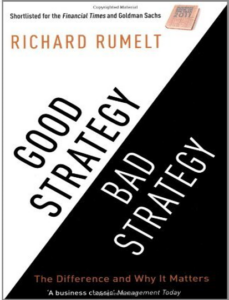
By Richard Rumelt
A definitive guide distinguishing genuine strategic thinking from goal-setting and wishful thinking. Rumelt provides the kernel-crux framework for diagnosing challenges and designing coherent action.
Wit and Wisdom:
Edge Case

Last week, a Fortune 500 client celebrated their AI model hitting 99.9% accuracy in testing. Three months later, they were explaining to the board why a delivery truck ended up in a lake.
The data scientists weren’t wrong. The model was brilliant. But nobody had stress-tested for “Route 404″—the edge case where GPS coordinates mapped to a body of water that hadn’t existed when the training data was collected.
Here’s what happens in the gap between laboratory perfection and operational reality: Edge cases don’t announce themselves. They emerge from the intersection of real-world complexity and system assumptions. That 0.1% error rate? It has a way of finding precisely the scenarios that matter most—the high-value customer, the critical shipment, the moment when your brand reputation is on the line.
Leaders building AI-enabled operations face a fundamental choice: optimize for average-case performance or design for worst-case resilience. The organizations that succeed do both. They celebrate the 99.9% while obsessively mapping the terrain where the other 0.1% lives.
Three questions to ask your team this week: What edge cases are we not testing for? What happens when our system encounters data it’s never seen? And, most critically, what’s our response protocol when the model confidently delivers the wrong answer?
Because in digital transformation, it’s not the mainstream scenarios that define your competitive position. It’s how gracefully your systems handle the unexpected. The delivery truck in the lake isn’t a technology failure. It’s a strategy gap.
What do you think? Please share your thoughts. If you like our content, pass it on to your colleagues and share it on social media.
Know of any tips about which companies and Topics we should cover next? Send over your suggestions.