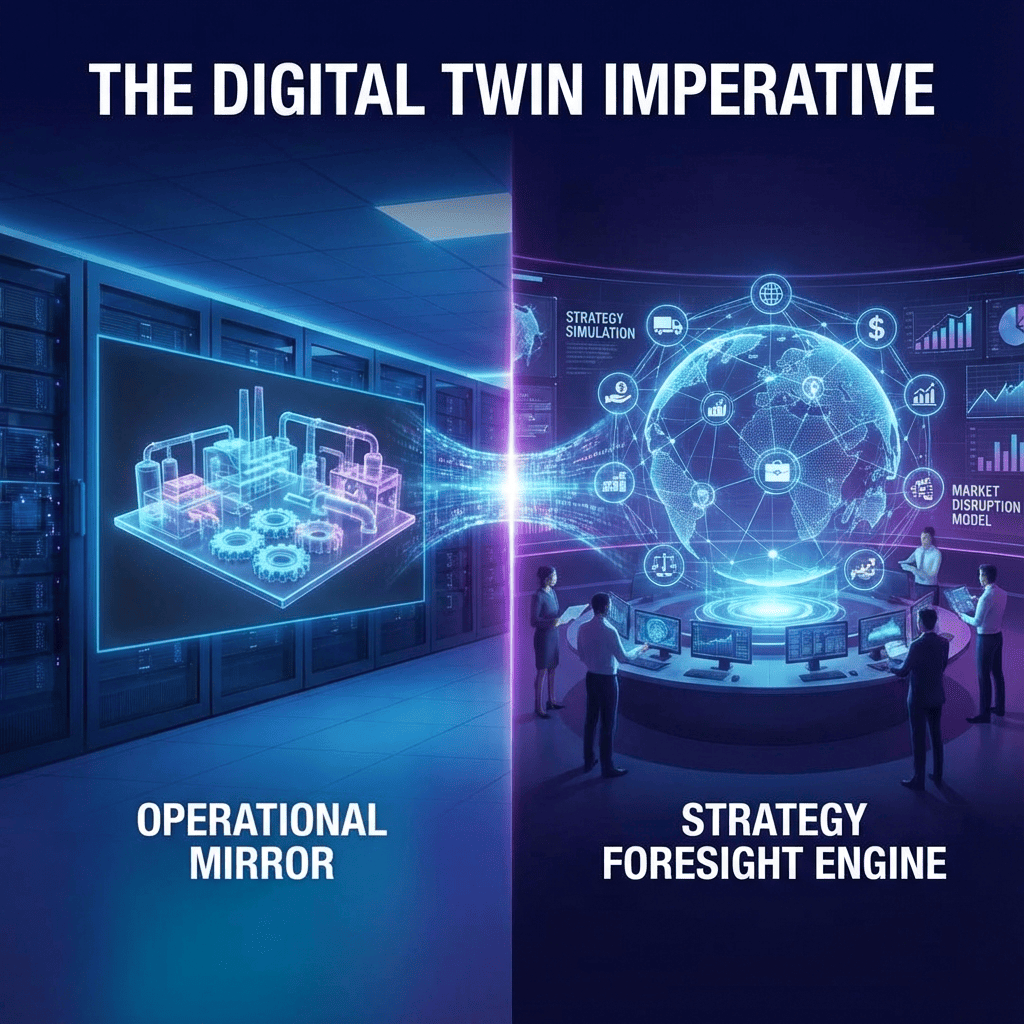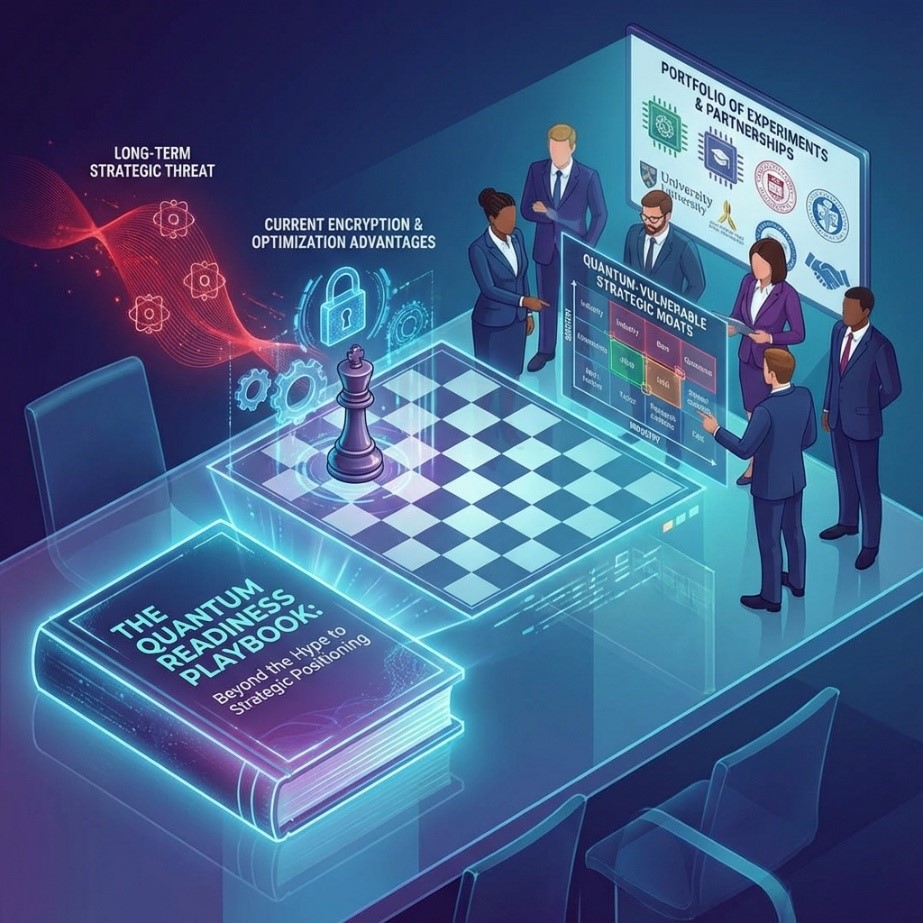
Edge-as-Strategy: The Coming Inversion of Cloud Economics.
The most profound shift in enterprise technology since the rise of cloud computing is happening not in data centers but in parking lots, factory floors, and retail stores. After two decades of centralizing compute power in distant clouds, the strategic advantage is flowing back to the edge—to the physical locations where business actually happens. The companies building dominance at these edge locations are discovering something counterintuitive: owning the edge doesn’t require owning the infrastructure.
This isn’t a technology story. It’s a strategy story about where value accumulates when the constraints change. And the constraints are changing dramatically.
The Cloud Centralization Trap
The cloud revolution succeeded by solving a capital allocation problem. Instead of buying servers that sat idle 80% of the time, companies could rent compute capacity on demand. Amazon Web Services turned this into a $90 billion business by 2023, followed closely by Microsoft Azure and Google Cloud. The strategic playbook became clear: centralize data, centralize compute, and deliver services through APIs and applications.
But centralization created new constraints. Real-time decision-making suffers when data must travel hundreds of miles to a cloud data center and back. A self-driving delivery vehicle can’t wait 100 milliseconds for the cloud to decide whether that’s a pedestrian or a shopping cart. A manufacturing line can’t tolerate network latency when coordinating robotic arms moving at industrial speeds. Retail systems can’t afford the degradation in customer experience when payment processing depends on consistent connectivity to remote servers.
These aren’t edge cases—they’re the core use cases driving the next decade of business value. Boston Consulting Group estimates that by 2025, 75% of enterprise-generated data will be created and processed outside traditional data centers, up from less than 20% in 2020. The question isn’t whether compute will move to the edge. The question is who will control it.
The New Edge Battleground
The strategic edge isn’t defined by technology topology—it’s defined by proximity to business-critical decisions. Three domains are emerging as the primary battlegrounds.
The Retail Edge is where consumer intent meets inventory reality. Walmart operates over 10,500 stores in the United States alone, each one a potential edge computing node. The company has invested heavily in edge infrastructure that enables real-time price optimization, predictive inventory management, and checkout-free shopping experiences. But Walmart’s edge strategy isn’t about deploying servers—it’s about deploying intelligence at the moment of customer interaction.
Consider Amazon’s Just Walk Out technology, which the company has now deployed in dozens of stores and licensed to other retailers. The system processes computer vision and sensor data locally to track what customers pick up, eliminating checkout lines entirely. This only works because the compute happens at the edge—in the store—where latency is measured in milliseconds and network dependencies are minimized. Amazon isn’t selling cloud services here; it’s selling edge orchestration as a service.
The Industrial Edge is where physical operations generate value. Siemens reports that manufacturers deploying edge computing for predictive maintenance have reduced unplanned downtime by 30-50%. But the real strategic insight isn’t the technology—it’s the business model. Siemens doesn’t require manufacturers to buy and operate edge infrastructure. Instead, the company provides MindSphere, an industrial IoT platform that orchestrates edge compute resources wherever the customer needs them: on machinery, in control rooms, or in micro data centers on the factory floor.
The financial model is revealing. Siemens customers pay for outcomes—reduced downtime, improved throughput, energy savings—not for servers. The capital expenditure shifts from the manufacturer to Siemens, while the value capture shifts based on measured business results. This is edge-as-strategy, not edge-as-infrastructure.
The Logistics Edge is where delivery meets destination. FedEx operates approximately 5,000 retail locations and 700 distribution centers globally, but its real edge is the 200,000 vehicles in motion at any given moment. Each vehicle is a mobile edge node capable of route optimization, package tracking, and delivery orchestration without constant cloud connectivity.
What makes this strategic rather than operational is how it changes competitive dynamics. When UPS deployed edge computing to its delivery vehicles in 2012 through its ORION system, the company initially saved 100 million miles annually—translating to roughly $300-400 million in annual savings. But the deeper advantage emerged over time: the data generated at the edge created a proprietary routing intelligence that competitors couldn’t easily replicate. The edge became a moat.
The CapEx-Light Edge Model
The conventional wisdom suggests that controlling the edge requires massive capital investment in distributed infrastructure. Install servers in thousands of locations. Deploy networking equipment. Hire technical staff to maintain it all. This is the trap that prevents most companies from pursuing edge strategies.
But the emerging winners are proving otherwise. They’re building edge dominance through three CapEx-light mechanisms that separate infrastructure ownership from strategic control.
Embedded Partnership Models place compute capability directly into third-party assets. NVIDIA’s Jetson platform, which powers edge AI applications, doesn’t require NVIDIA to own factories or delivery vehicles. Instead, the company embeds its edge computing modules into partners’ physical infrastructure—manufacturing equipment from Fanuc, autonomous vehicles from TuSimple, retail systems from NCR. NVIDIA captures value through the intelligence layer, not the infrastructure layer.
The financial elegance is striking. NVIDIA’s partners bear the capital cost of deploying edge infrastructure. NVIDIA provides the silicon and software that makes that infrastructure intelligent. As the platform becomes more valuable, partners become more locked in—not through contracts, but through accumulated data, trained models, and operational dependencies. The CapEx sits on someone else’s balance sheet while the strategic control sits with NVIDIA.
Infrastructure-as-a-Service at the Edge extends the cloud economic model to distributed locations. Vapor IO operates edge data centers in cell tower locations across major cities, but customers don’t lease space or buy servers. They deploy applications into Vapor IO’s infrastructure, which sits within five to ten milliseconds of end users. The company raised $90 million to build this infrastructure—capital that customers don’t have to deploy themselves.
The strategic insight is that infrastructure proximity creates competitive advantage only when paired with the right applications. Vapor IO provides the proximity; customers provide the applications; value accrues to whoever captures the customer relationship and the resulting data. Startups can deploy edge applications in dozens of cities without building dozens of edge data centers.
Edge Orchestration Platforms treat physical locations as heterogeneous resources to be managed centrally. Google’s Anthos and Amazon’s Outposts represent the cloud giants’ recognition that edge control matters more than edge ownership. These platforms let enterprises run workloads across their own data centers, retail locations, factory floors, and public cloud resources through a single control plane.
But the more interesting model comes from companies like Couchbase, which provide distributed databases designed specifically for edge scenarios. Retail chains use Couchbase to run point-of-sale systems that continue to function during network outages, syncing with central systems when connectivity returns. The capital investment isn’t in edge servers—it’s in software that makes any server at the edge strategically useful. Couchbase grew to a $1.6 billion valuation by enabling edge strategies, not by funding them.
Strategic Implications for Enterprise Leaders
The shift to edge-as-strategy creates both opportunities and risks that executives must navigate carefully. The first-order effect is operational—reduced latency, improved reliability, better customer experiences. But the second-order effects reshape competitive dynamics in ways that demand strategic attention.
Data gravity shifts from centralized to distributed. When compute happens at the edge, data is generated and often processed locally. This fragments the unified data lake that many enterprises have spent the last decade building. The strategic question becomes: where should data reside to maximize its value?
Starbucks resolved this by treating each store as a data-generating point while centralizing the learning. Individual stores don’t need access to global sales patterns, but the global analytics team needs access to aggregated store data. The company uses edge computing to process transaction data locally while selectively transmitting insights to central systems. The result is a distributed data strategy that keeps latency low and storage costs contained while preserving enterprise-wide intelligence.
Platform power concentrates at the edge orchestration layer. In the cloud era, AWS, Azure, and Google Cloud captured enormous value by controlling the infrastructure layer. In the edge era, value will concentrate among companies that control how distributed resources get orchestrated, regardless of who owns them.
This creates an opening for new platform players. Cloudflare, historically known for content delivery, now positions itself as an edge computing platform with over 275 data centers worldwide. Developers can deploy applications to Cloudflare’s edge without managing infrastructure, paying only for compute time used. The company went public at a $5 billion valuation and has grown to over $10 billion by 2024—not by selling bandwidth, but by selling edge orchestration.
Switching costs shift from data lock-in to operational dependencies. Moving data between cloud providers remains difficult, but moving edge deployments is harder still. When your intelligence is embedded in physical locations—retail stores, factory equipment, delivery vehicles—changing platforms means changing operational workflows that directly touch customers, products, and revenue.
This has profound implications for vendor selection. The edge platform you choose today will be harder to replace than your cloud provider, because it becomes integrated into your daily operations. Executives should evaluate edge partnerships with the same rigor they apply to ERP selection: assume a ten-year relationship and choose accordingly.
The Unicorn Blueprint
The next generation of billion-dollar companies will be built on edge-as-strategy principles, but not by replicating the cloud giants’ infrastructure-heavy model. The pattern emerging from early winners points to a specific playbook.
Start with an edge-native use case where cloud centralization fails. Autonomous vehicle company Waymo didn’t begin by building cloud infrastructure—it began with a problem that demands edge computing: vehicles making split-second decisions with or without network connectivity. The edge requirement drove the architecture, not the other way around.
Build the orchestration layer, not the infrastructure layer. Samsara, which provides IoT solutions for physical operations, reached a $5 billion valuation without building factories or buying delivery fleets. The company provides sensors, cameras, and edge-compute capabilities that customers deploy into their existing physical infrastructure. Samsara’s value is in connecting and orchestrating these distributed resources, not in owning them.
Capture proprietary data at the point of creation. When intelligence processes at the edge, the company controlling that intelligence captures first access to the data. Toast, the restaurant point-of-sale system, processes every order at the edge—in the restaurant—giving the company unprecedented visibility into dining patterns, menu performance, and operational efficiency. Toast went public in 2021 at a $20 billion valuation, not by owning restaurants, but by owning the intelligence layer where dining transactions happen.
Design for graceful degradation, not perfect connectivity. Edge-native companies assume intermittent connectivity and design accordingly. Square’s point-of-sale system processes credit card transactions at the edge and syncs with the cloud when possible. This architectural decision—treating edge compute as primary and cloud as supplementary—reverses the traditional model and creates a more resilient customer experience.
Layer edge capabilities with central intelligence. The most successful edge strategies maintain a central intelligence layer that learns from distributed edge deployments. Ocado, the online grocery company, uses edge computing in its automated warehouses to coordinate thousands of robots in real-time. But the central intelligence layer continuously optimizes routing algorithms based on aggregate performance data from all warehouses. The edge provides speed; the center provides learning.
Risk Factors and Implementation Traps
Moving to edge-as-strategy introduces risks that centralized cloud deployments largely avoid. Security surfaces multiply as compute is distributed across hundreds or thousands of locations. Each edge node becomes a potential vulnerability, especially when located in unsecured retail environments or on mobile assets such as delivery vehicles.
The strategic response isn’t to avoid edge computing—it’s to architect differently. Zero-trust security models, where every request is authenticated regardless of location, become essential. Companies like Zscaler have built multi-billion-dollar businesses by providing security architectures designed specifically for distributed compute environments.
Governance complexity scales with physical distribution. When data is processed in multiple jurisdictions, regulatory compliance requirements multiply. European stores must comply with GDPR. California locations must comply with CCPA. Healthcare facilities must meet HIPAA requirements. Centralized cloud deployments simplify compliance by consolidating data in known locations. Edge deployments fragment compliance obligations across every physical location.
The solution isn’t technical—it’s operational. Companies successfully deploying edge strategies build compliance into the orchestration layer. Data residency rules, retention policies, and access controls are enforced centrally but executed locally. This requires legal, compliance, and technology teams to collaborate more closely than traditional cloud deployments demand.
Integration complexity increases when edge systems must interoperate with centralized enterprise systems. ERP, CRM, and supply chain systems typically assume centralized data models. Edge deployments create distributed data models that must be synced with central systems without causing conflicts or data quality issues.
The companies navigating this successfully treat synchronization as a first-class design problem, not an afterthought. They build explicit reconciliation logic that resolves conflicts, handles out-of-order updates, and maintains data consistency across distributed and centralized systems. This requires more sophisticated data architecture than cloud-only deployments, but it’s essential for edge strategies to deliver their promised value.
The Strategic Horizon
The edge-as-strategy shift will reshape industry structures in ways that parallel how cloud computing reshaped software. Just as SaaS companies displaced on-premise software vendors by changing the capital model, edge-native companies will displace cloud-native incumbents by changing the latency model.
Retail will see continued consolidation between physical presence and digital intelligence. Companies that master edge computing in stores will deliver shopping experiences that pure e-commerce players cannot match—immediate inventory verification, instant price matching, checkout-free convenience. The retailer with the best edge orchestration, not the biggest cloud infrastructure, will win.
Manufacturing will fragment between companies that treat factories as cost centers and those that treat them as intelligence centers. The latter will deploy edge computing across every piece of equipment, creating operational intelligence that optimizes in real time rather than in batch. The productivity gap between edge-native and cloud-dependent manufacturers will widen until it becomes a competitive chasm.
Logistics will stratify between companies that track shipments and companies that orchestrate them. The former treats packages as passive objects moving through a network. The latter treats every vehicle, every package, and every delivery location as an active participant in a distributed intelligence system. The customer experience difference—predictive delivery windows, dynamic rerouting, proactive exception handling—will become the basis for pricing power.
The executives who recognize this shift early will ask different questions than their peers. Not “Should we deploy edge computing?” but “Where in our physical operations would local intelligence create disproportionate value?” Not “How much will edge infrastructure cost?” but “Who can provide edge orchestration without requiring capital deployment?” Not “What edge technology should we buy?” but “What edge platform should we build on?”
The answers to these questions will determine which companies build the next generation of competitive moats and which companies watch their cloud-era advantages erode. The edge is coming. The question is whether you’ll own it through capital or through strategy.
For executives evaluating edge strategies, three actions warrant immediate attention: First, map your physical operational footprint—stores, factories, vehicles, equipment—and identify where local decision-making latency currently constrains business value. Second, evaluate edge orchestration platforms that can deploy intelligence to those locations without requiring capital investment in infrastructure. Third, design data governance models that support distributed data generation while maintaining centralized learning and compliance. The companies that move decisively on these three dimensions will be positioned to capture value as the edge reshapes industry economics.